At a glance
- Keep a matched control when qualifying a process in a new operating environment.
- Separate completion of a test run from evidence that the process meets its acceptance criteria.
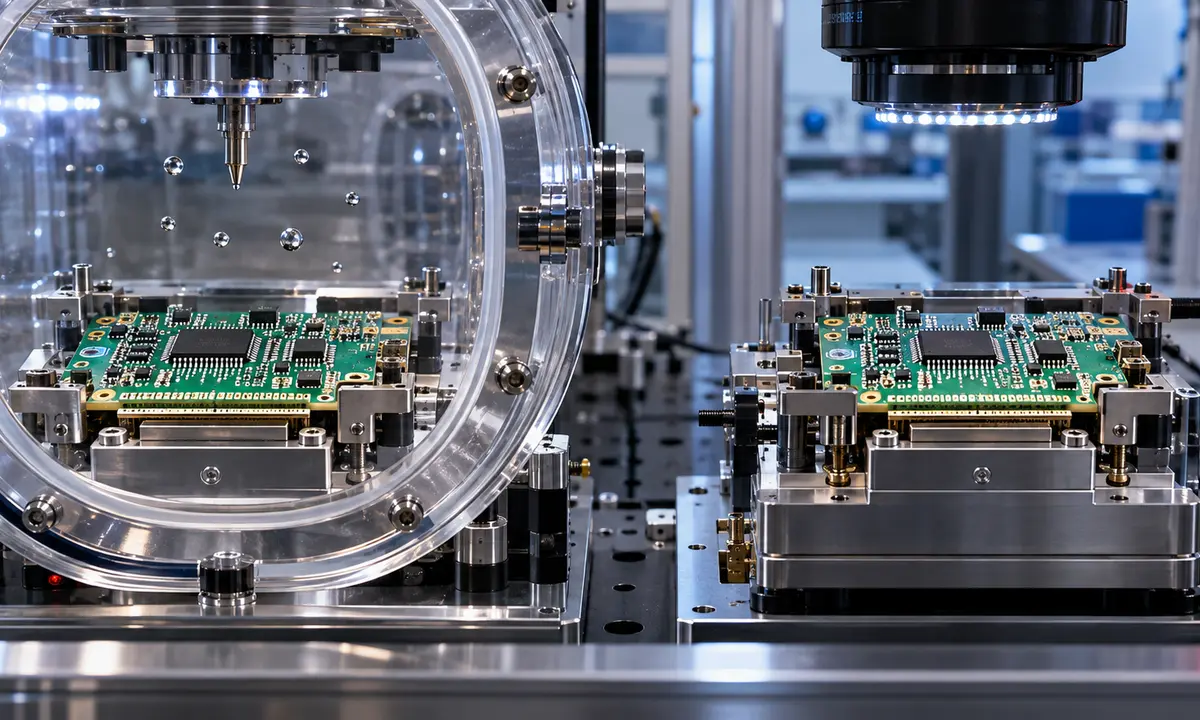
A station operations post written by Mark A. Garcia and published by NASA on 18 September 2026 records the final run of the MIYOKA investigation. Flight engineer Anil Menon used a lead-free technique to solder components onto a circuit board in microgravity. The completed board was stored for return to Earth, where it is due to be compared with identical samples soldered on the ground.
That sequence establishes a useful boundary around the current evidence. The orbital manufacturing step is complete and a matched comparison is planned, but the post does not publish inspection results, defect counts, joint-strength measurements or a finding that the process performs as well as its ground counterpart. Completion of the run is therefore a development in the test programme, not a product-qualification result.
Dunes Bureau interpretation: when a manufacturer moves an established process into a different environment, a matched control can make the effect of that change easier to examine. Teams can hold the component set, material specification and inspection method constant, then compare samples made under the old and new conditions against criteria defined before testing. Differences may then be investigated without assuming that the environment caused every observed result.
The broader lesson is about evidence gates. Record separately that the process was executed, that samples were recovered, that comparisons were completed and that acceptance thresholds were met. MIYOKA does not yet demonstrate a commercial yield, reliability or cost advantage, and it should not be read as proof that a space-tested method is ready for production. Its present value is the clear pairing of a changed environment with a ground reference.
Sources
Week Ends With Soldering, Lunar Simulations, and Cargo Mission Preps ↗
Mark A. Garcia · NASA — International Space Station Blog. Accessed 2026-09-19. NASA media usage and AI source-disclosure guidelines.