
At a glance
- The next Starliner flight is planned as an uncrewed engineering evaluation, with crewed service targeted for 2028 only after further testing and certification.
- Commercial planning should treat each validation result as a decision gate rather than count every announced mission as committed capacity.
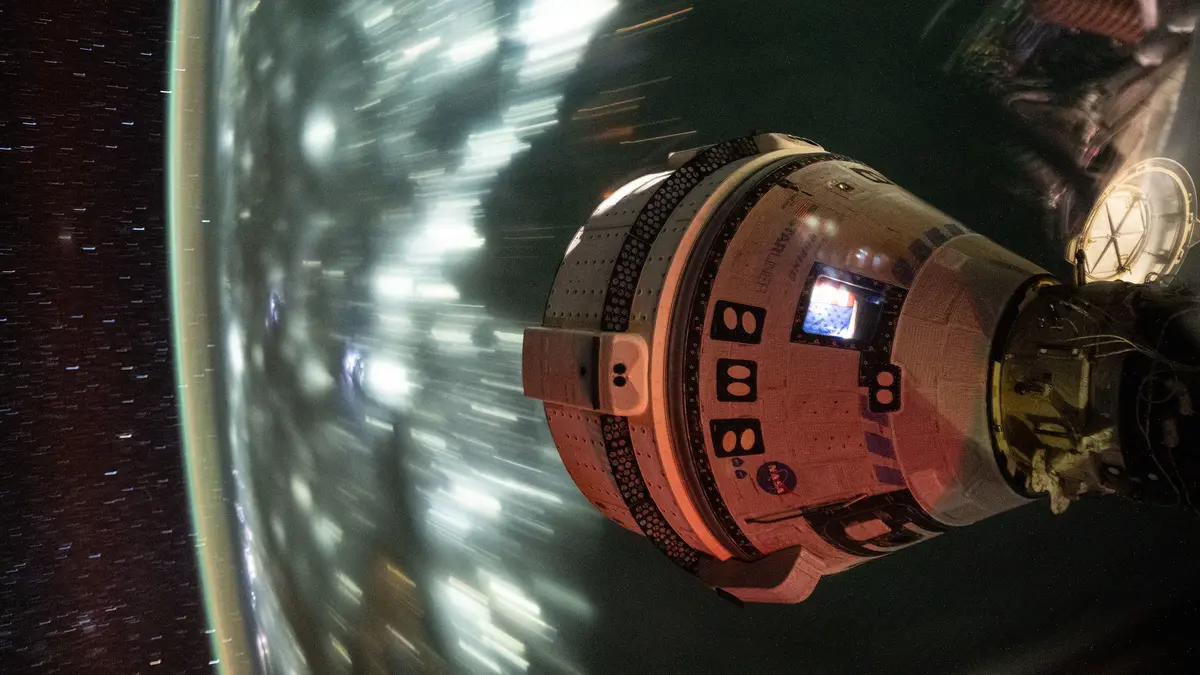
NASA published a revised Starliner development plan on 28 September 2026. The agency says it intends to exercise options for a fifth and sixth flight, while working with Boeing and United Launch Alliance to certify the Vulcan rocket after Atlas V’s final flight. The near-term sequence is more important than the headline mission count: Starliner-1 is planned as an uncrewed engineering evaluation before astronauts return on Starliner-2, currently targeted for 2028.
The uncrewed mission could fly in December 2026 or January 2027, but NASA describes that timing as potential rather than fixed. Its purpose is to verify thermal improvements, collect performance data for qualification and identify residual risk. The agency says the 2024 investigation produced 61 recommendations after reaction-control thrusters operated outside their engineering qualification during the crewed test flight.
NASA and Boeing have already made thermal modifications to the service module and plan an additional thruster-valve design change. The release also lists new crew-module thrusters, batteries and minor parachute modifications among the improvements expected before full certification. These are defined engineering tasks; the source does not provide a programme cost, supplier revenue forecast or probability that the proposed launch window will hold.
Dunes Bureau interpretation: the commercially useful change is the clearer sequence of evidence. Space-sector suppliers, insurers and investors should separate three milestones—an available launch slot, a successful uncrewed evaluation and completed crew certification—because each carries a different level of programme risk. Treating all three as one return-to-service date would overstate near-term certainty.
A disciplined dashboard would therefore track whether each modification has completed qualification, whether the uncrewed flight meets its demonstration objectives and which residual risks remain open afterward. Contract options for later missions may signal future demand, but they are not equivalent to delivered flights or recognised revenue. The NASA release establishes a pathway, not a guaranteed schedule.
The broader lesson for complex industrial programmes is that recovery plans become more credible when they expose stage gates and the evidence required to pass them. For commercial partners, that makes milestone-based capacity and cash planning more defensible than forecasts built around a single target date.
Sources
NASA, Boeing Share Update on Commercial Starliner Development Plans ↗
Gerelle Q. Dodson · NASA. Accessed 2026-09-29. NASA media usage and AI source-disclosure guidelines.