
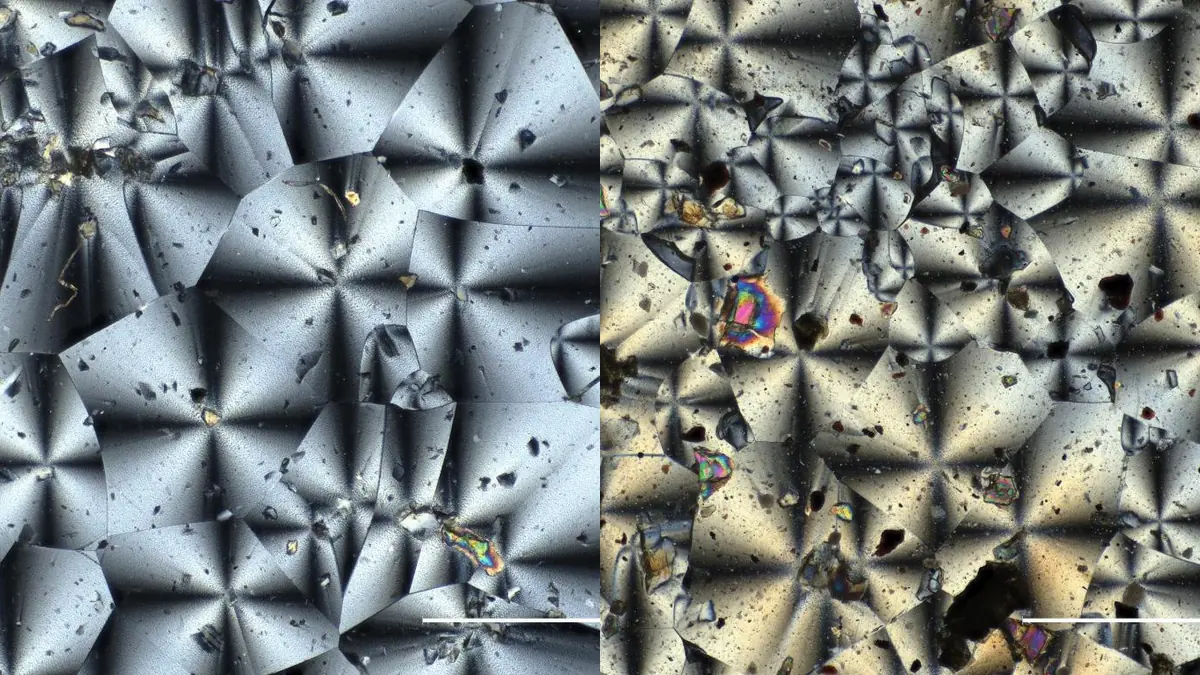
At a glance
- NASA Glenn has produced a composite from a biodegradable plastic and simulated lunar or Martian dust, with the mix changing strength and processability.
- The material is still in qualification: environmental testing, repeatable production and part-level performance matter before lower resupply becomes a planning assumption.
A NASA image article published on 29 September 2026 describes a new material developed at Glenn Research Center for possible in-space manufacturing. The team mixed a biodegradable plastic with simulated lunar and Martian dust. The plastic could be produced by bacteria using crew waste or carbon dioxide as feedstock, creating a possible route from locally available inputs to useful manufactured parts.
The update reports that adding the simulated dust made the plastic stronger and easier to process. Changing the type and amount of dust also changed the material’s properties. NASA lists structural brackets, wrenches and chairs as examples of equipment that might eventually be made inside a habitat. Those examples describe possible applications, not qualified products or an operational production system.
Important commercial evidence is still missing. The publication gives no mechanical-strength values, production yield, energy requirement, cycle time, recycling performance or cost comparison with launched spares. It also does not establish how consistently bacteria could produce the polymer or how the composite behaves after repeated fabrication and reuse.
Testing is the next defined stage. Samples are being evaluated in Glenn’s Lunar Environment Structural Test Rig for extreme-temperature performance, and more samples are planned for exposure outside the International Space Station on the forthcoming MISSE-23 mission. These tests can provide environmental evidence; they do not by themselves demonstrate a complete manufacturing process or a flight-ready part.
Dunes Bureau interpretation: the investable idea is not simply that local dust can become a product. It is that a constrained supply chain may be redesigned around a qualified feedstock. A practical readiness plan should separate five gates: reliable polymer production, consistent mixing, repeatable part fabrication, environmental durability and closed-loop reuse. Failure at any one gate can erase the logistics advantage promised by local material.
For suppliers, the near-term opportunity is therefore in measurement and process control as much as in the material itself. Batch records, test coupons, contamination controls and part-specific acceptance criteria would make progress visible without treating a laboratory result as deployed capacity. The source establishes a promising material pathway; the cost and resupply benefits remain an interpretation to be tested.
Sources
Under the Microscope: NASA-Made Material for Moon Manufacturing ↗
Ellen Bausback · NASA. Accessed 2026-09-29. NASA media usage and AI source-disclosure guidelines.