
At a glance
- Specify the heating timeline, internal temperature limits and tested configuration alongside the maximum temperature.
- Treat an engineering-model result as evidence for that test scope; ask separately about operating life and other exposure conditions.
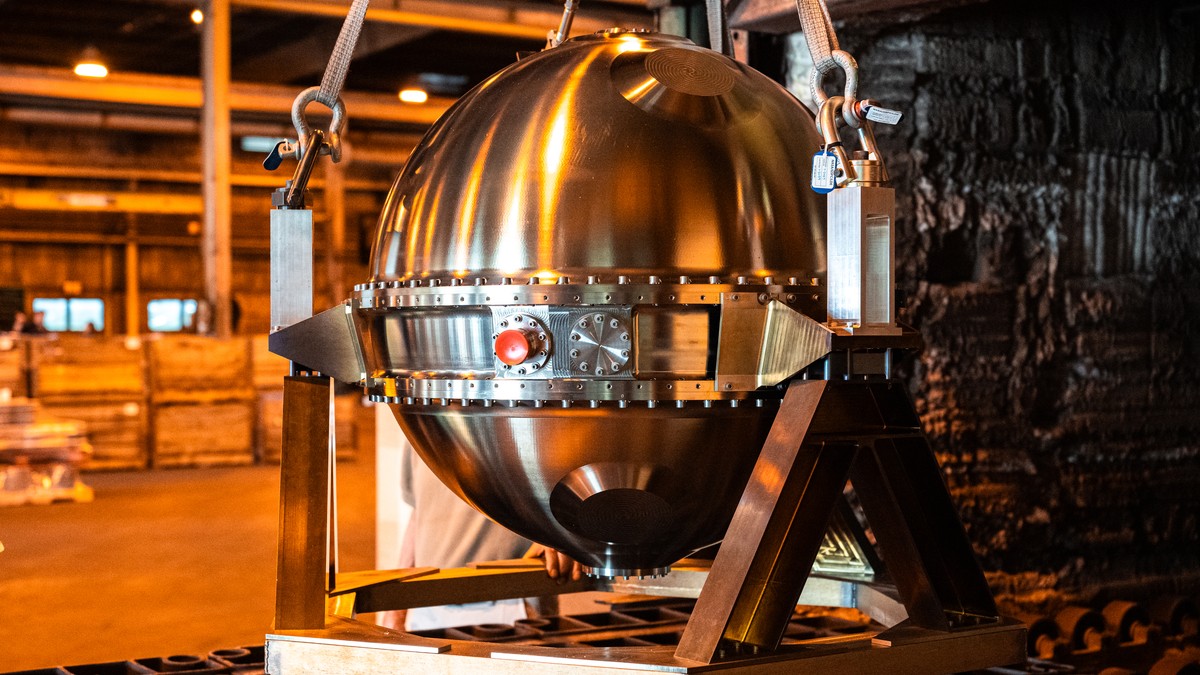
Ashley Balzer’s NASA Science update of 24 September 2026 describes a completed thermal test of an engineering model of the DAVINCI descent probe. The campaign ran from 28 August to 10 September at Rex Heat Treat in Bedford, Pennsylvania. A furnace heated the model to 465 degrees Celsius on a roughly one-hour timeline, matching the planned descent through Venus’s atmosphere. The model survived six cycles, with more than 100 thermal sensors monitoring hardware that simulated the scientific instruments.
The distinction is between the environment outside an enclosure and the conditions experienced by its contents. DAVINCI must protect sensitive instruments while admitting hot atmospheric gases through dedicated inlets for analysis. The reported result concerns the engineering model and simulated instruments. The source also describes the mission as working toward approval for final design and fabrication; this test is not a completed flight qualification.
Dunes Bureau interpretation: industrial buyers can turn this example into a more precise thermal acceptance record. Request the temperature-versus-time profile, the position of each critical internal measurement, the permitted temperature of the protected component and the exact enclosure configuration. A certificate listing only a maximum chamber temperature leaves unanswered how long the equipment was exposed and what happened inside it.
For an enclosure protecting sensors near a furnace or other hot process, the procurement question should be specific: does the proposed test reproduce the relevant start-up, operating and shutdown sequence? Ask whether cables, seals, mounting points and openings match the delivered unit. Agree in advance which observations count as a pass and which changes require another test. These are Dunes Bureau’s proposed purchasing checks, not a test protocol supplied by the NASA report.
Six cycles do not establish a service-life claim for unrelated commercial equipment. Nor does this report establish performance under every combination of pressure, vibration, corrosion and heat. The business value of the example is a clearer conversation between buyer, supplier and test laboratory: define the exposure history and the protected function before interpreting a successful result.
Sources
NASA’s DAVINCI Beats Heat in Preparation for Blistering Venus Descent ↗
Ashley Balzer · NASA Science. Accessed 2026-09-30. NASA media usage and AI source-disclosure guidelines.