
At a glance
- Measure recovery through a completed business transaction, alongside the device’s return to network service.
- Request evidence for the exact devices, software versions and fallback arrangements intended for deployment.
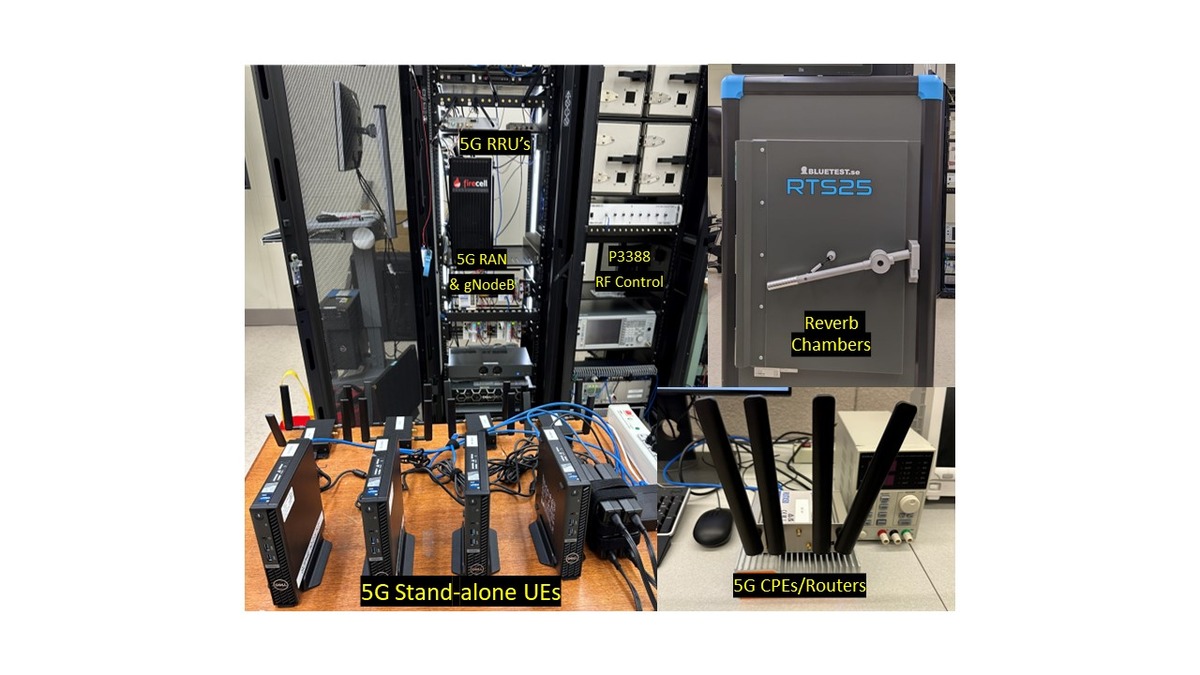
NIST’s National Cybersecurity Center of Excellence released an initial public draft on false base stations on 30 September 2026. These systems impersonate legitimate cellular equipment. The paper, CSWP 36G, reports six scenarios tested in the centre’s 5G laboratory, using commercial smartphones. Its findings concern service availability as well as the protection of a connection.
All six scenarios caused denial of service in the tested setup. In some cases, a security control rejected an unsafe connection or altered message, yet the device still could not obtain legitimate service. In several scenarios, reconnection required the false station to be switched off and a roughly 12-minute retry timeout to have expired. The result separates successful authentication safeguards from successful recovery.
This is a draft study of selected cases, not a failure-rate estimate for all 5G phones or networks. The paper also discusses detection and mitigation for private networks, and alternative connectivity such as Wi-Fi. It does not establish that a particular backup arrangement will meet an enterprise’s operating requirements.
Dunes Bureau interpretation: a buyer commissioning cellular connectivity for a warehouse or service operation should ask two distinct questions. Did the device refuse an unsafe connection? How long did the intended application remain unusable? A restored radio link alone is an incomplete acceptance measure if a scanner still cannot submit an order or a monitoring system cannot deliver its next reading. Define recovery around that completed task, with a time limit agreed against the operation’s tolerance for interruption.
The corresponding purchasing evidence should identify device models, software versions, network configuration and any manual intervention required. In an authorised, isolated test environment, record when disruption begins, when legitimate connectivity returns and when the application completes its first successful transaction. Test the proposed fallback route and the handover back, including queued work. These are Dunes Bureau’s suggested operational checks, not a NIST certification scheme. They turn a broad promise of resilience into evidence that an operations team can evaluate.
Sources
False Base Station: Applying 5G Cybersecurity and Privacy Capabilities — NIST CSWP 36G, initial public draft, 30 September 2026 ↗
Michael Bartock, Jeffrey Cichonski, Parisa Grayeli and Sanjeev Sharma · National Institute of Standards and Technology. Accessed 2026-10-01. NIST Technical Series reuse terms.
False Base Station — draft 5G white paper announcement, 30 September 2026 ↗
National Cybersecurity Center of Excellence · NIST Computer Security Resource Center. Accessed 2026-10-01. NIST public-information reuse terms.